


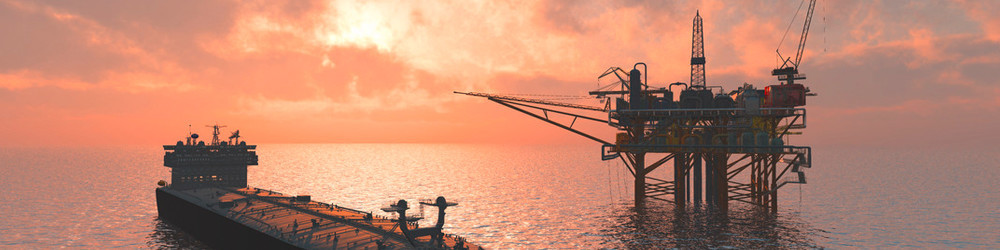
Offshore & Subsea Load Cells Built for High Capacity in Harsh Environments
Precision force measurement for offshore cranes, winches, mooring systems, and subsea applications — engineered to survive where standard sensors fail. With more than 40 years supplying the industry, BLH Nobel is a leading global supplier of high-quality customised load cells.
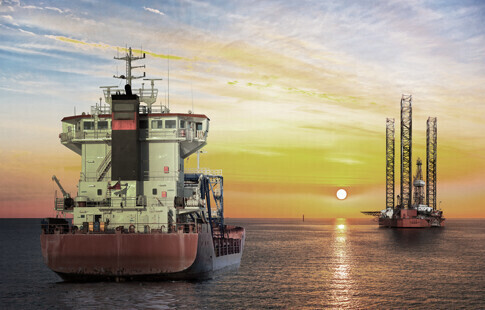
Supplying offshore
Ingress protection available
Maximum load capacity
Certified on all models
Offshore Environments Demand More Than Standard Load Cells
Saltwater, explosive atmospheres, constant vibration, and extreme overloads make most industrial sensors unreliable. Downtime on an offshore platform is not just costly — it is dangerous. BLH Nobel sensors are designed from the ground up to eliminate those failure modes.
- Corrosion & Ingress Standard IP ratings fail in splash zones and subsea exposure. BLH Nobel delivers IP67 as standard and IP68 for fully submersible installations.
- Hazardous Areas ATEX and IECEx certification is standard across the entire product range — no special variants, no compromise on performance.
- Space Constraints Crane pins, winch drums, and mooring hardware rarely accept off-the-shelf geometries. Every load cell can be custom-dimensioned to fit your exact installation.
- Maintenance Access Field replaceable amplifiers (plug n' play) allow signal conditioning to be swapped without lifting the load cell — no recalibration required.
Why Engineers Specify BLH Nobel for Offshore Force Measurement
- ATEX & IECEx Certified: Full explosion-proof approval on all models for use in hazardous areas — globally compliant without secondary certification or special variants.
- IP67 Standard, IP68 Available: Hermetically sealed construction for prolonged submersion. IP68 protection is essential for subsea and tidal splash-zone installations.
- 4–20 mA Amplifier Output: Embedded LCAMP100 or LCAMP300 digital analog amplifiers with 5 ms response time and HART communication — standard PLC interface.
- Field Replaceable Amplifier: LCAMP100 is plug n' play — replace the amplifier module on site in minutes without disturbing the mechanical installation or sensor calibration.
- Custom Geometry & Capacity: Capacities from 0.5 kN to 20 MN. BLH Nobel engineers tailor dimensions, materials, and connector types to each application.
- 3.1 Material Certificates: Delivered with EN 10204 3.1 material traceability as standard. 3.2 certificates available on request for class society requirements.
- Redundant Bridge Outputs: Optional single or dual (redundant) measurement bridges on all models — critical for safety-rated crane load cells and mooring monitoring.
- Overload-Resistant Construction: Designed to survive vibration, shock loads, and overload events characteristic of offshore crane and winch duty cycles.
Load Cell Types for Offshore & Oil and Gas Applications
Four proven sensor geometries cover the full range of force-measurement requirements. All are available with embedded 4–20 mA amplifiers, ATEX/IECEx approval, and custom dimensioning.
|
|
|
|
|
|
|
|
|
|
|
|
|
|
|
|
|
|
|
|
|
|
|
|
Embedded Amplifiers — Fixed & Field Replaceable
All load cells can be delivered with an embedded digital analog amplifier providing a standard 4–20 mA output. Both types carry ATEX and IECEx approval.
|
|
|
|
|
|
|
|
|
|
|
|
Where BLH Nobel Load Cells Work Offshore
BLH Nobel solutions are in service on platforms, drill ships, cable lay vessels, and subsea installations worldwide.
- Offshore Crane Load Monitoring: KIMD and KISD shear beam sensors installed in crane sheave pins provide continuous overload protection and accurate hook load readout — across thousands of lift cycles in corrosive atmospheres.
- Winch Load Measurement: KOSD shear beams integrated into winch sheave or drum shaft pins measure line tension on anchor handling, tugger, and utility winches under dynamic and shock loads.
- Mooring Load Measurement: KEND tension links inserted directly into mooring chains or wire tails give permanent mooring load data for FPSOs, semi-submersibles, and jack-up rigs.
- Cable Laying Tension Monitoring: KISD sensors on cable lay vessels measure tension in power cables and umbilicals during deep-water installation — accuracy directly affects installed cable integrity.
- Subsea & ROV Applications: IP68-rated KOSD and KEND subsea load cells operate continuously underwater, providing force data from ROV-deployed and permanently installed sensors at depth.
- Oil & Gas Topsides Process: ATEX/IECEx-certified sensors approved for Zone 1 and Zone 2 hazardous areas on topsides process decks — from wellhead structures to production equipment weighing.
Frequently Asked Questions
What type of load cell is best suited for offshore environments?
It depends on the application. The KOSD double-ended shear beam is the most versatile choice — its circular cross section, IP68 availability, and high overload tolerance suit mooring, winches, and crane use. For higher accuracy, the KIMD or KISD are preferred. For in-line tension measurement in mooring chains and slings, the KEND tension link is the natural choice. BLH Nobel application engineers will recommend the right geometry for your constraints.
How does force measurement work on an offshore crane?
A shear beam sensor — typically the KIMD — is installed in the crane's sheave pin or lower block. As the crane lifts a load, the applied force deflects the beam; bonded strain gauges output a millivolt signal proportional to the force. An embedded 4–20 mA amplifier converts this to a standard current loop that feeds the crane's overload protection system. The assembly is sealed to IP67 or IP68 and ATEX-certified.
Is it possible to get a custom load cell for a specific space or load requirement?
Yes. Custom dimensioning is a core part of BLH Nobel's engineering offering. The team works from your installation drawings to produce a load cell fitting the available envelope, matching your capacity range, and meeting all environmental and certification requirements. Capacities from 0.5 kN to 20 MN are achievable, with integrated amplifiers, specific connectors, and full material documentation.
What is the lead time for a custom offshore load cell?
BLH Nobel's flexible engineering organisation is structured for competitive lead times on custom solutions. Exact delivery depends on design complexity and required certifications. Contact the regional sales team early in your project — they can provide a realistic estimate and, where possible, work within your procurement timeline.
Ready to specify the right load cell for your offshore or subsea project?
Our engineers have 40+ years of offshore application experience. Share your load range, installation envelope, and environmental requirements — we will recommend the right solution.