



Precision instruments for
process weighing and force measurement
BLH Nobel weighing and control instruments deliver outstanding ease of use, flexibility and reliable performance in tough industrial environments. They integrate seamlessly with varied systems, follow industry standards and communicate easily with factory networks.
With user-friendly interfaces, robust construction and easy customization, including over 250 application software packages, they're the measurement instrumentation of choice across demanding industries.
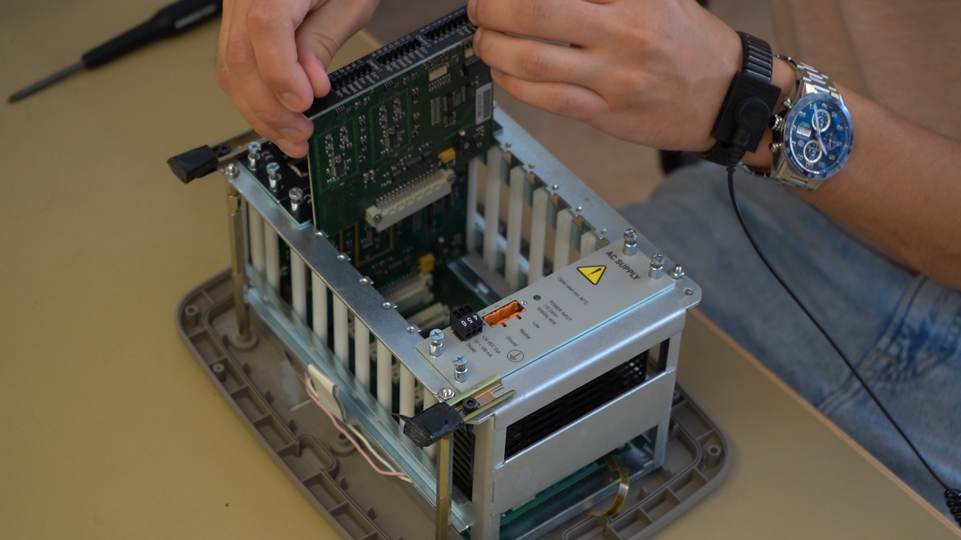
From a single transmitter to plant-wide control
A coherent family of weighing and force measurement instruments, pick the channel count, mounting and connectivity your process needs.
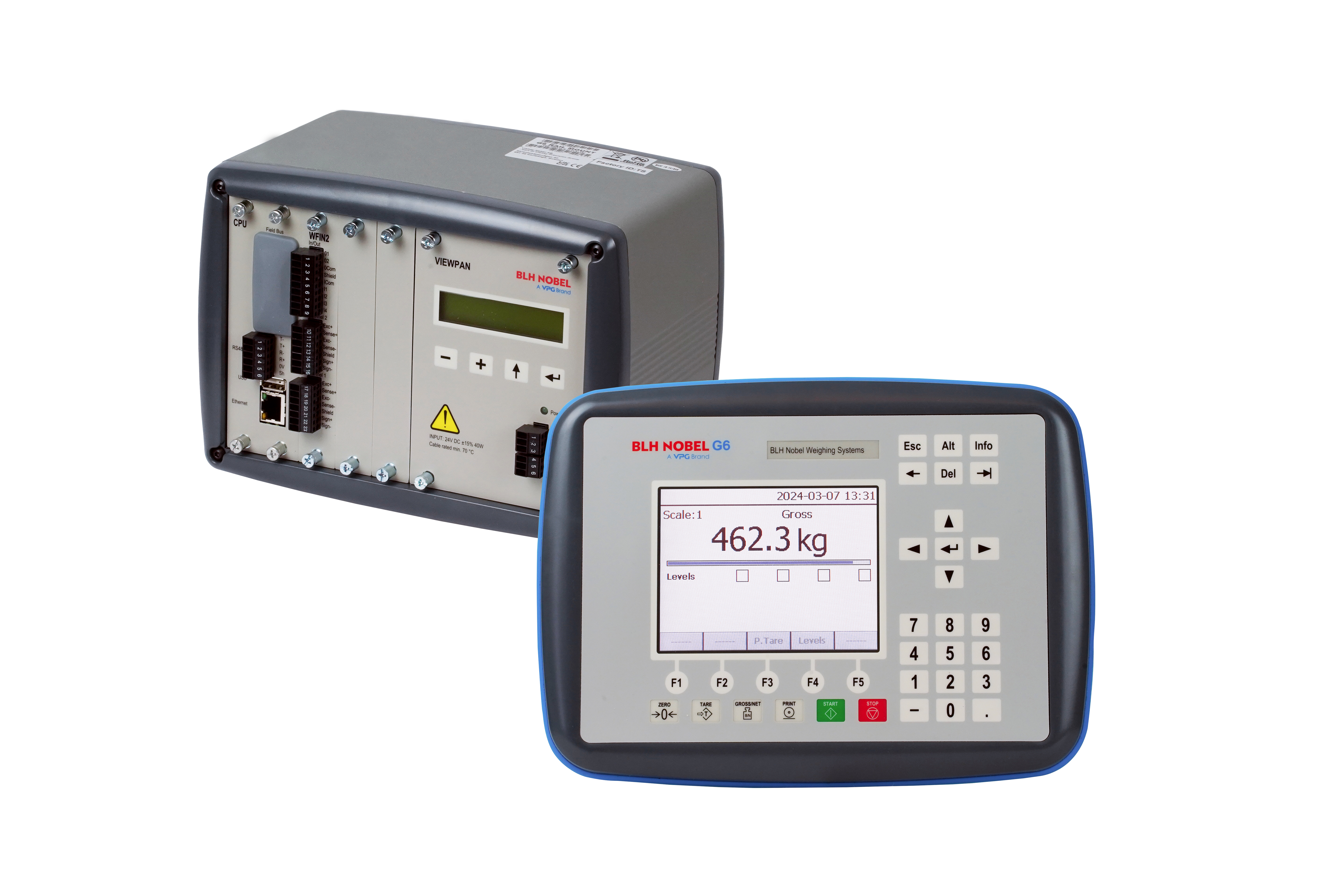
G6
A next-generation multi-channel process instrument with up to 8 high-speed, fully synchronized channels and up to 6 field-swappable modules. Building on the 20-year-proven G4, it adds an advanced system-on-chip, 0.002% static accuracy and a wide fieldbus range. 5.7″ colour touchscreen panel-mount (IP65) or compact DIN-rail (IP20), with DC or AC power.
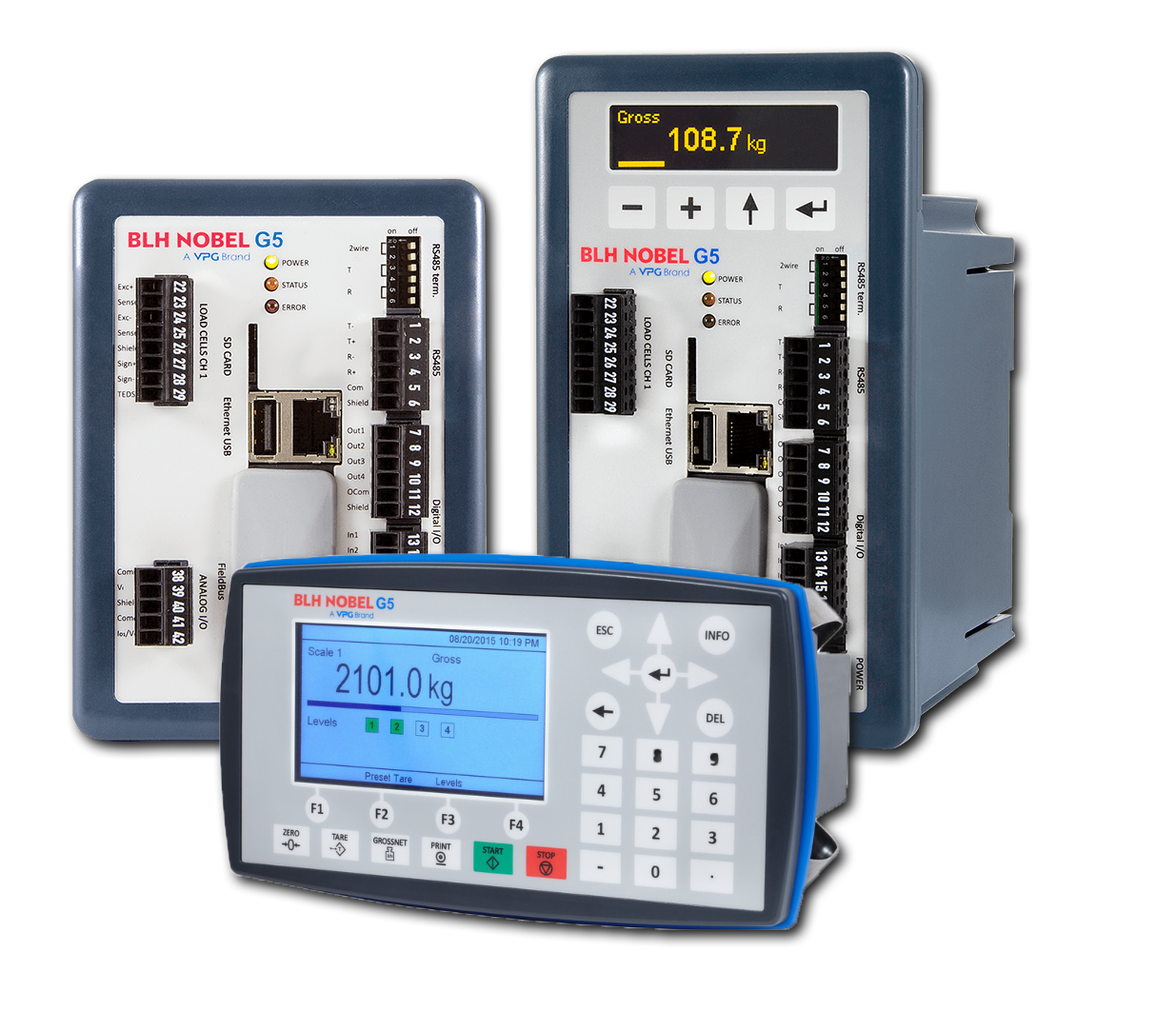
G5
A high-performance single-channel weighing instrument in three variants, G5-PM panel-mount indicator, G5-RM DIN-rail transmitter and G5-RMD DIN-rail with display. 24-bit at 2400 samples/s driving up to 8 × 350 Ω cells, an embedded web server with ERP / QMS integration, the full fieldbus range, and zener-barrier connection for hazardous areas.
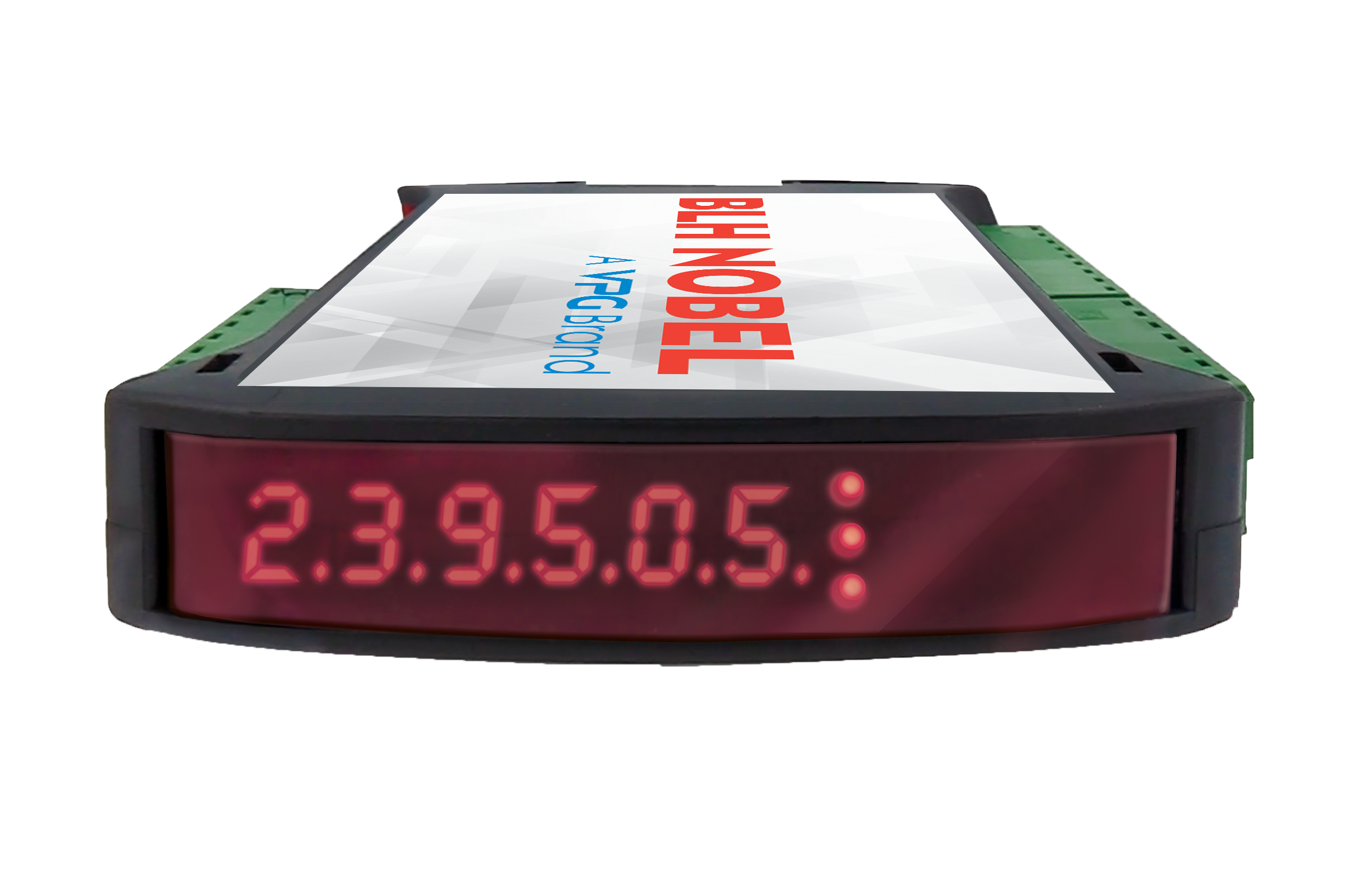
WST5
A 35 mm DIN-rail weight transmitter that doubles as a local display. 24-bit conversion drives up to 4 × 350 Ω (or 8 × 700 Ω) load cells, with RS485, RS232, Modbus RTU and ASCII, a wide fieldbus range, a 4-20 mA analog output and two programmable setpoint relays for level control. A metrological mode supports legal-for-trade to EN45501.
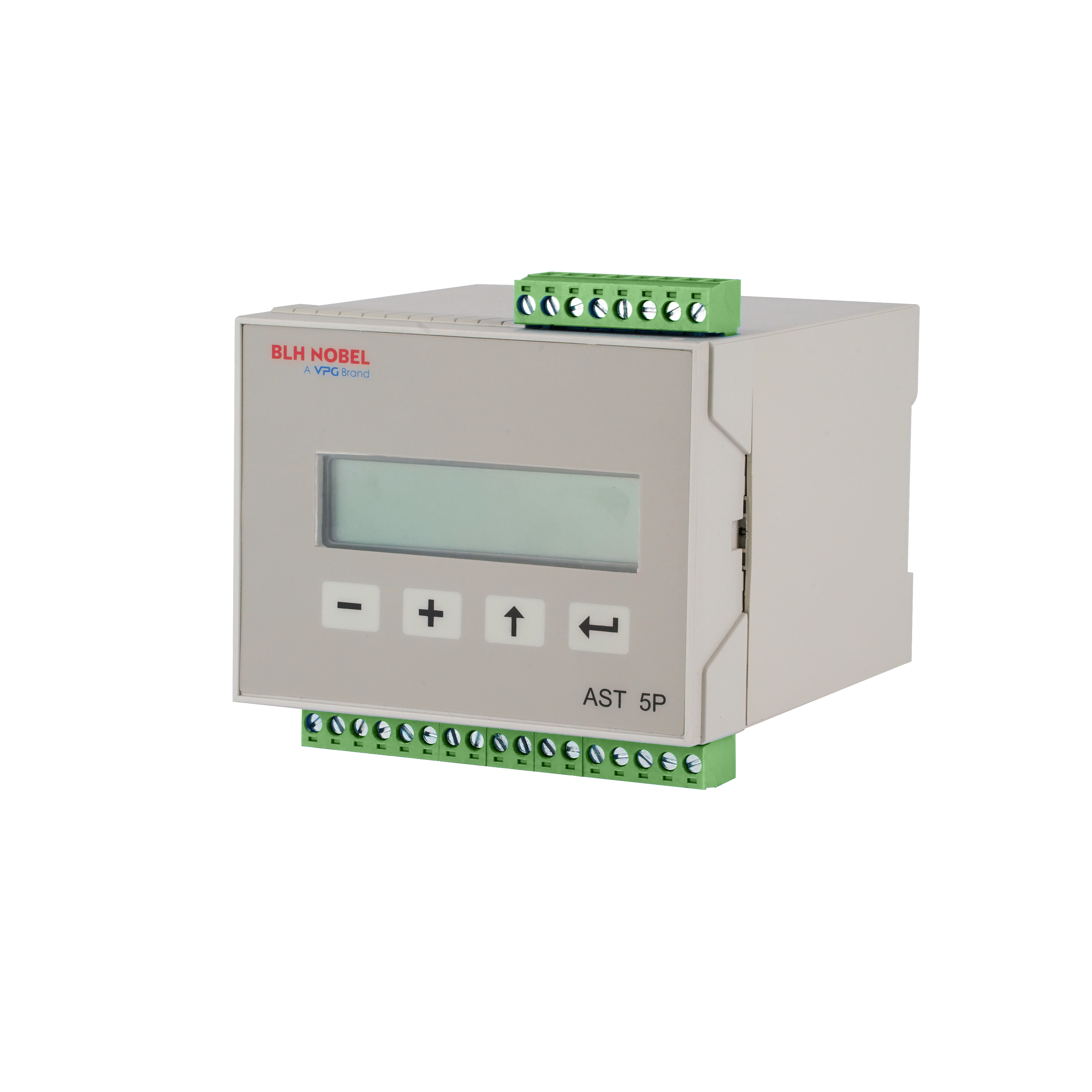
AST 5P
A compact DIN-rail load cell signal transmitter that conditions strain-gauge signals into a stable output for PC and PLC control. A 24-bit A/D with <0.005% non-linearity feeds flexible analog (±10 VDC / 4-20 mA) and RS-485 Modbus RTU, with two sub-20 ms relay outputs for level control. Drop in with no panel rework, configured with the Windows deltaCOM software.
Running an older system?
The G4 and Generation 3 instruments (TAD 3 · WST 3 · AST 3P) live on our legacy products page, each with a clear, same-form upgrade path that protects your existing BLH Nobel investment. New: G6 Crane software for overhead weighing.
Accurate weight, delivered to operators and PLCs at once
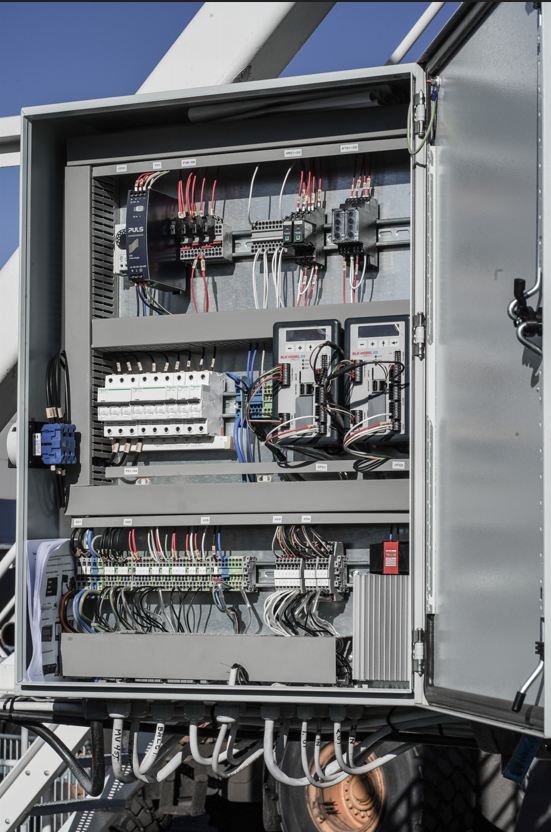
A weighing system is only as reliable as the instrument behind it. A digital weight indicator gives operators a clear, real-time readout; a load cell signal transmitter conditions and sends that same value to your control system. BLH Nobel builds both, and many of our products do both at once, so the number you act on and the number your PLC receives are always the same. Tuned to ignore vibration, thermal expansion, electrical noise, agitation and dust, every reading stays stable, repeatable and traceable.
Every feature earns its place
Fieldbus-ready
A true fieldbus weighing instrument, PROFINET and EtherNet/IP, plus PROFIBUS DP, DeviceNet and ControlNet on the G5, with Ethernet, RS485, USB and analog output.
Multi-channel control
One multi-channel weight indicator manages many scales. The G6 takes up to six field-swappable modules and eight high-speed channels, full multi-vessel oversight from a single instrument.
Mount it your way
Panel-mount indicator at the operator station, compact DIN-rail process weighing instrumentation in the cabinet, or a protective enclosure / stainless field cabinet for washdown areas.
Batching & dosing built in
Programmable set-points turn an instrument into a weight controller for batching, filling and dosing, consistent recipes in chemical, food and pharmaceutical lines.
Tailored to you
A wide range of application software for weighing, force and high-speed dynamic measurement, every package customizable, and a new one developed when there's no standard fit.
By design
Engineered to shrug off extreme temperatures, moisture, dust and vibration, insensitive to the disturbances that compromise accuracy in demanding environments.
Instrument FAQ
What is the difference between a weight indicator and a weight transmitter?
A weight indicator displays the weight locally so an operator can read, monitor and act on it, usually adding taring, set-points and batching. A weight transmitter (or load cell signal transmitter) mainly conditions the load cell signal and sends the value to a PLC, often in a compact DIN-rail or panel format. An indicator is read by people; a transmitter feeds machines, and many BLH Nobel models, such as the WST5, do both at once.
Can one weighing instrument control multiple scales or process vessels?
Yes. A single BLH Nobel multi-channel weight indicator can manage several independent scales or vessels. The G6 accommodates up to six field-swappable modules and handles up to eight high-speed weighing channels, full control of multiple process vessels from one instrument.
Which industrial weighing instruments support PROFINET and EtherNet/IP?
The G5 supports all major fieldbus protocols, PROFINET, EtherNet/IP, PROFIBUS DP, DeviceNet and ControlNet. The multi-channel G6 platform also offers fieldbus connectivity, so both panel-mount and DIN-rail instruments integrate directly into PLC and factory networks.
How do you choose the right weighing instrument for process weighing?
Match the instrument to four factors: channel count (single scale vs. multi-vessel), communication (analog, serial or fieldbus), mounting and environment (panel, DIN-rail, hazardous or washdown), and application functions like batching or force measurement. A single scale feeding a PLC suits a compact WST5 or AST 5P; advanced multi-vessel control suits the G6 or G5.
What communication protocols do industrial weight indicators support?
A broad range: analog output (4–20 mA), serial (RS485, RS232, USB, Modbus RTU, ASCII), Ethernet with an embedded web server, and the major fieldbus standards, PROFINET, EtherNet/IP, PROFIBUS DP, DeviceNet and ControlNet, connecting to PLCs, factory networks and ERP or quality systems.
Get the right weight indicator or weight transmitter for your process
Tell us your scales, channels and network, and a BLH Nobel applications engineer will recommend the exact configuration, or design a custom one. Field service and calibration in 100+ countries.