


The WST5 Weight Transmitter
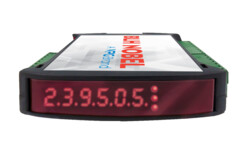
Engineers shouldn’t have to choose between a clear local readout and clean PLC integration. The WST5 is a weight transmitter with display that does both — a precision strain gauge load cell transmitter on a 35 mm DIN rail, turning raw mV/V signals into stable, repeatable weight values your control system can trust, even in dusty, vibrating, electrically noisy environments where lesser instruments drift.
At a Glance
|
|
|
|
|
|
|
|
|
|
|
|
|
|
|
|
|
|
|
|
|
Core Features, Engineered for Industrial Weighing
Every feature on the WST5 exists to solve a real integration headache — bridging the gap between your load cells and your control system without sacrificing accuracy, speed or serviceability.
- Weight transmitter with display a front-panel display shows live weight, configuration parameters and diagnostic errors, while three protected keys handle ZERO and calibration directly at the machine, with no laptop required for routine setup.
- Precision strain gauge load cell transmitter a stable 24-bit weighing front end conditions standard mV/V strain gauge load cells with high resolution, so your hopper, tank or platform reads the same today as it did at commissioning.
- Modbus RTU weight transmitter (RS485 / RS232 / ASCII) multiple serial interfaces let the WST5 drop into existing serial networks, connect to a PC for configuration, or feed a remote display.
- PROFINET weight transmitter and fieldbus options order it as a PROFINET transmitter, or with PROFIBUS DP, EtherNet/IP, EtherCAT or CANopen. Dual RJ45 ports allow line topology and selectable 32/64/96/128-byte I/O areas map into your PLC.
- 4-20 mA load cell output transmitter (analog) when you just need a signal on an analog input card, the WST5 delivers a 4-20 mA output plus ±10 V / ±5 V voltage ranges, the most universal way to bring weight into any PLC or DCS.
- Relay outputs for setpoint and level control two programmable setpoints turn the WST5 into a standalone level controller for high/low limits, dosing cut-offs and overfill protection, without burdening the PLC.
Where the WST5 fits
As a versatile load cell to PLC transmitter, the WST5 fits anywhere a process needs to know, report and act on weight. Typical applications include:
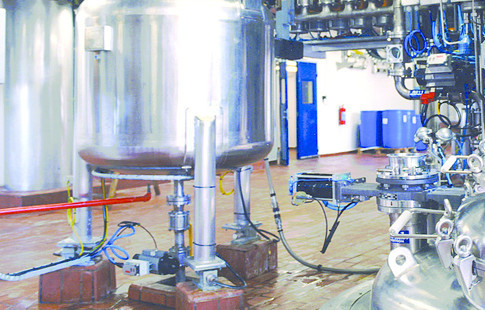
Tank & silo weighing
Connect three or four load cells under a vessel through a junction box to a single WST5, and send live weight to the PLC over PROFINET, Modbus or analog output for inventory and level monitoring.

Process weighing & batching
A weight transmitter for process weighing and packaging: the two programmable setpoints can drive coarse/fine dosing cut-offs and feeder control directly, without burdening the PLC.

Packaging & filling lines
The 4-20 mA analog output integrates with existing PLC analog input cards, while the front-panel display gives line operators a local check weight at the machine.

Platform & conveyor scales
Support for up to 8 × 700 Ω load cells lets the WST5 drive larger platforms, with gross/net values available over serial or fieldbus to material-handling controls.

Force & load monitoring
As a strain gauge transmitter, the WST5 can read standard mV/V sensors for force or load measurement, with setpoint relays available for threshold alarms.

Legal-for-trade weighing
A metrological configuration mode supports legal-for-trade installations to EN45501 when paired with an approved system and the correct national certificate.
Frequently Asked Questions
What is the difference between a weight transmitter and a weight indicator?
A weight indicator is built primarily to display weight to a local operator. A weight transmitter is built primarily to condition and transmit the load cell signal to a control system over fieldbus, serial communication or a 4-20 mA analog output. The WST5 does both: it is a weight transmitter with a display, so an operator reads weight at the machine while the same value travels to your PLC or DCS. In practice the line has blurred, and instruments like the WST5 are described as combined indicator/transmitters.
Which DIN rail weight transmitter supports both Modbus RTU and PROFINET?
The BLH Nobel WST5. It is a 35 mm DIN-rail weight transmitter that supports Modbus RTU over RS485 and RS232, and is also available as a PROFINET weight transmitter. Other fieldbus options include PROFIBUS DP, EtherNet/IP, EtherCAT and CANopen, so one compact platform covers nearly every PLC architecture you are likely to meet on a plant floor.
How do you connect load cells to a PLC with a 4-20 mA weight transmitter?
- Wire the strain gauge load cells (excitation +/−, signal +/− and sense lines) to the transmitter’s load cell terminals, through a junction box if you have more than one cell.
- Calibrate the WST5 to your full-scale weight (theoretical or with reference weights).
- Wire the transmitter’s 4-20 mA analog output to an analog input card on the PLC.
- Scale the loop in the PLC, where 4 mA = zero weight and 20 mA = full scale. This makes the WST5 a straightforward load cell to PLC transmitter for any controller with an analog input.
How many load cells can a compact weight transmitter handle?
A compact weight transmitter such as the WST5 can drive up to 4 × 350 Ω load cells, or up to 8 × 700 Ω load cells, connected in parallel through a junction box. That comfortably covers the three- and four-cell arrangements used on most tanks, hoppers, silos and platform scales.
Is the WST5 weight transmitter approved for legal-for-trade weighing (EN45501)?
The WST5 includes a metrological configuration mode designed for legal-for-trade weighing in line with EN45501. Because legal-for-trade approval applies to the complete weighing system and depends on the certificate valid in your country, confirm the exact approval and certificate number for your application and region with BLH Nobel before commissioning a legal-for-trade installation.
Spec the Right WST5 for your Application
Panel mount indicator, DIN rail transmitter, or DIN rail with display — our application engineers will help you choose the variant, Tell us your load cells, your PLC and your environment, and our weighing engineers will configure the exact WST5 variant (serial, fieldbus or analog) you need.