


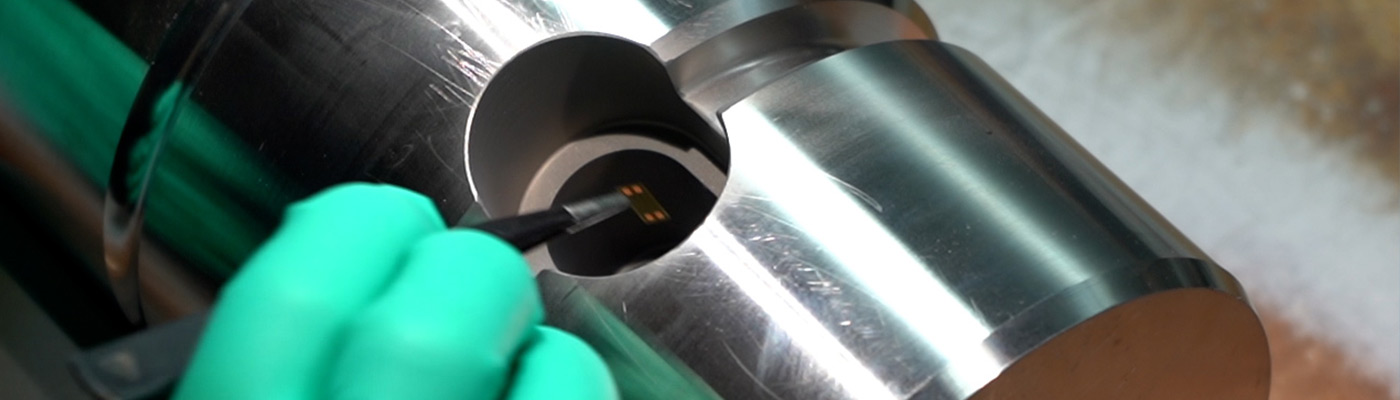
Custom OEM Load Cells: Embedded Weighing and Force Measurement Engineered Into Your Machine
As a machine builder or system integrator, you know the problem with catalogue load cells: they are designed to stand alone. When you try to embed one into your equipment, the geometry doesn’t fit, the capacity is wrong, or the environment exceeds the spec. The result is mechanical compromise, added installation complexity and warranty claims that surface months after commissioning.
BLH Nobel is a custom load cell manufacturer that designs custom OEM load cells to become part of your machine — not an afterthought bolted onto it. Our load cells mount directly into your existing structure, replacing shafts, pins or bearing points to eliminate adaptor plates, reduce part count and cut installation time. Our in-house mechanical, electronics and software teams act as an extension of your engineering department, delivering embedded weighing solutions for machine builders and OEM force measurement sensors optimised for your exact load paths, environment and communication architecture — from first concept to certified volume production.
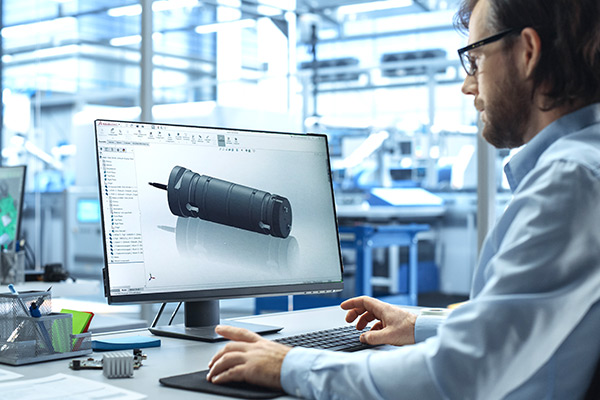
A Complete Custom Load Cell Design and Manufacturing Partner
BLH Nobel’s OEM capability spans the full development cycle, with every part — load cells, instrumentation and software — developed and built in our own facility.
- Custom design, engineered into your equipment. Load cells designed to replace existing shafts, pins or bearing points for a precise structural fit. We draw on an engineering database built over decades, then validate performance with 3D FEA simulation before any prototype is cut.
- Any material, any capacity. Ultra high-strength steel, stainless steel or super duplex — selected for your environment. High-capacity custom load cells reaching into the thousands of tonnes, down to precision micro-range sensors for delicate dosing systems. Tension, compression, shear, bending and torque — or any combination of these — can be measured.
- KIS double-cantilever shear beam technology. One proven load cell principle, adaptable to hundreds of custom configurations, that rejects disturbances from vibration, thermal expansion and lateral forces.
- Embedded amplifiers built for OEM integration. The fixed LCAMP 300 and the field-replaceable, plug-and-play LCAMP 100 — a simple unit that stores calibration data inside the load cell itself, so a sensor can be swapped in the field without recalibration.
- Tailored weighing instrumentation. Modular G-series instrumentation (including the G5 measurement-amplifier platform) backed by more than 250 application software packages, with custom development and Fieldbus, Ethernet and industrial protocols built in.
- ATEX/IECEx certified load cells. Certification for hazardous areas, plus FM and CSA approvals for North American markets, so your equipment ships with a certified weighing system already integrated. IP67 ingress protection is standard.
- In-house production and full traceability. From single prototypes to thousands of units per year, manufactured in the same facility where our instruments and software are developed — consistent quality without changing suppliers.
From Concept to Production
A structured development path that turns your integration challenge into a production-ready, validated design — typically in weeks, not months, because we build on proven engineering rather than a blank sheet.
- Listen and understand. Our engineers study your application, constraints, environment and integration requirements.
- 3D design and simulation. FEA software validates and optimises the design for your exact load paths before any metal is cut.
- Prototype and validate. Functional prototypes are tested under real-world conditions, with iterative refinement until performance is verified.
- Volume production. In-house manufacturing with full traceability, scaling from single units to thousands per year.
Custom Weighing Embedded in Your Equipment
BLH Nobel serves OEM customers across dozens of industrial sectors. A few representative examples:
Process equipment — reactor and vessel manufacturers
Manufacturers of chemical reactors, mixing vessels and storage tanks integrate custom weigh modules directly into their support structures. The load cells ship pre-installed, giving the end customer turnkey weighing without separate procurement or commissioning. Typical build: KIS custom variants, ATEX certification, G-series instrumentation and custom batching software.
Material handling — conveyor and filling systems
Conveyor manufacturers, big-bag filling stations and packaging lines need weighing that runs at production speed without becoming a bottleneck. We design load cells that replace existing pins, shafts or rollers to add weighing capability with no added footprint. Typical build: custom pin load cells, high-speed batching, Fieldbus and Ethernet integration.
Heavy industry — crane, mining and offshore equipment
High-capacity custom load cells for crane manufacturers, mining-equipment OEMs and offshore platform builders. Our force measurement sensors replace structural pins to provide weighing, overload protection and life-cycle monitoring in subsea, extreme-temperature and high-vibration environments. Typical build: KOSD load pins, KIMD heavy-duty modules, super duplex and subsea-grade materials.
Vehicle OEM — on-board weighing for heavy vehicles
Dump-truck, articulated-hauler and special-vehicle manufacturers integrate on-board weighing directly into the production line, so the weighing system is part of the vehicle design rather than a field-installed accessory. Typical build: custom vehicle load cells, compact instrumentation and CAN bus integration.
An Engineering Partner, not Just a Supplier
BLH Nobel’s value to OEM customers is listening to your challenges, integrating advanced technology and delivering uniquely engineered solutions that give your products a competitive edge.
Co-engineering. Our mechanical, electronics and software engineers work alongside your team, bringing application experience from diverse industrial sectors — often suggesting approaches your team hasn’t considered.
Speed to market. An extensive database of proven designs combined with 3D simulation means your solution builds on validated technology, reducing development risk and time to first production units.
Lifetime support. Global field service, calibration and troubleshooting for the equipment you’ve sold — backed by the same expertise that designed the weighing system inside it.
OEM Engineering FAQ
How can I integrate custom load cells into existing OEM equipment to reduce installation cost?
The key is designing the load cell to replace an existing structural component — a shaft, pin, bearing point or support leg — rather than adding a separate weighing system. BLH Nobel analyses your equipment’s load paths and designs a load cell that mounts directly into the existing structure with minimal modification, eliminating adaptor plates, extra hardware and integration engineering. For many OEM customers this significantly reduces installation time and lowers total cost of ownership across the installed base.
What is the process for designing a custom load cell for a specific OEM application?
It starts with a conversation about your capacity range, physical envelope, environment, accuracy needs and communication architecture. We then search our database of proven designs for a starting point and use 3D FEA simulation to validate and optimise the design under your exact operating conditions. A functional prototype is built, tested and refined, then moves to production — typically weeks rather than months, because we build on decades of validated engineering.
How do custom-designed load cells reduce total cost of ownership versus off-the-shelf components?
Off-the-shelf load cells carry hidden costs: adaptor plates and mounting hardware, engineering time to work around geometry mismatches, higher failure rates in environments the catalogue part wasn’t built for, and field service for premature drift or corrosion. A custom load cell engineered for your application from day one removes these, typically lowering assembly time, warranty returns and field failures across your fleet.
What certifications are available for custom OEM load cells in hazardous or harsh environments?
BLH Nobel custom load cells are available with ATEX, IECEx, FM and CSA certifications for explosive atmospheres (gas and dust zones), so your equipment ships with certified hazardous-area weighing already integrated. IP67 ingress protection is standard, with higher protection available for high-exposure or submerged installations.
How do I select the right load cell material — stainless steel, super duplex or high-strength alloy?
Material selection depends on the corrosive environment, the operating temperature range and the required capacity-to-size ratio. Standard stainless steel suits most industrial and food-grade applications; super duplex is specified for aggressive marine, offshore and chemical environments where standard stainless would pit; ultra high-strength alloy delivers maximum capacity in the smallest envelope, which matters for space-constrained retrofits. Our engineering team recommends the optimal material for your operating conditions and service life.
Start Your OEM Project
Whether you need a single custom load cell prototype or a fully integrated weighing system for volume production, our OEM engineering team is ready to listen, design and deliver. The first step is a conversation.
Already know your load pin requirements? Use our specification template to define the dimensions and characteristics for your application, then send it to your BLH Nobel representative for a quotation — open the load pin specification template.