


FMU Tension Measurement Module
Engineered to read true tension in environments that destroy ordinary sensors — humidity, splashing water, chemicals and high heat.
±0.1% class accuracy | Capacity to 800 kN | 5-year warranty | 20+ years in the field
Stop chasing Tension you Can't Trust
On a modern paper machine or rolling mill, tension drift is invisible until it shows up as wrinkles, web breaks, baggy edges, off-spec coat weight and unplanned downtime. The root cause is often the same: a web tension sensor that only reads a single force component, drifts with temperature, or fails in wet, hot, corrosive sections of the line. The FMU Tension Measurement Module solves that at the source.
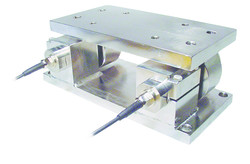
The FMU is a complete web tension load cell module — two cylindrical precision load cells, a load plate that carries the pillow block, and a base plate that bolts to your machine support. Because the cells rotate to the true resultant force direction, the FMU captures all of the tension, not just a vertical or horizontal slice. The result is repeatable, real-time tension data your PLC or DCS can act on — and a sensor rugged enough to keep delivering it in the sections where other transducers quit.
Built for the Line, not the Lab
- True resultant-force measurement. Rotatable cylindrical cells align with the exact tension vector — the highest possible accuracy from any roller geometry.
- No wrap angle restrictions. Symmetrical or asymmetrical wrap, small or large — you lose no signal and need no sloped mounting plate.
- Wide rangeability. Accurate from a few percent of capacity up to full scale — ideal for heavy rolls with low tension forces.
- Harsh-environment construction. High ingress protection and temperature compensation stand up to humidity, wash-down, chemicals and heat.
- Low-profile retrofit design. Fits the existing bearing house with minimal line-profile change — often no machine modification required.
- Fully customizable. Roll force measurement customized to your mechanics and forces — from a few Newtons up to mega-Newton class, capacities to 800 kN.
- Low cost of ownership. Sensing elements are standard high-accuracy KIS load cells — competitively priced spares and quick maintenance.
- A complete system. Pairs with BLH Nobel transmitters and the modular G4 instrument for multichannel, synchronous output to PLC/DCS.
One Platform, Every Demanding Section
The FMU is a proven web tension transducer across continuous-web and strip industries — paper, board, tissue, metals, textiles and chemicals — including the zones that punish equipment hardest.
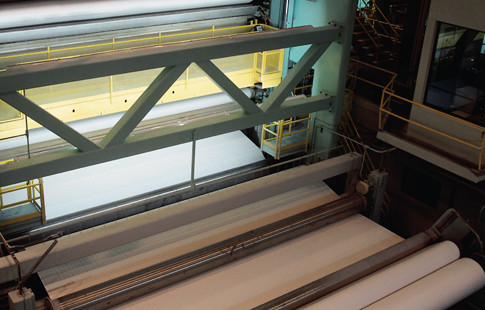
Pulp & paper — load cell for paper machine
Press sections, coaters, breaker stacks, pick-up and bottom felts, calenders, size presses and winders. The FMU lets paper machines run faster with less downtime while holding sheet quality.
Example: a tissue-machine press section running 5.7 m web width at 145° wrap, 60 °C, with splashing water and chemicals — two 50 kN FMU units (one per side) gave operators continuous control of felt wear, stretch and start-up tension.
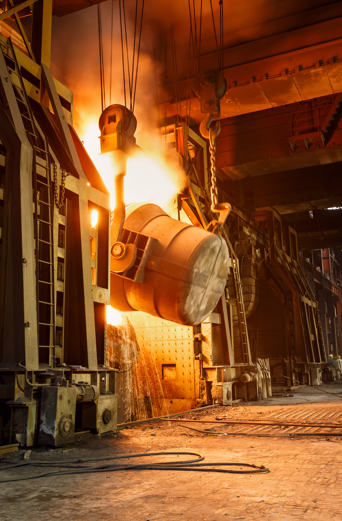
Metals — strip tension in rolling mills
Cold rolling mills, annealing and galvanizing lines. Connected to BLH Nobel transmitters, FMU units form a complete strip-tension system accurate from a few percent of range to full capacity — up to 800 kN.
Example: a cold mill measuring resultant strip tension independent of force direction, retrofitted with zero adapter plates and near-zero maintenance.
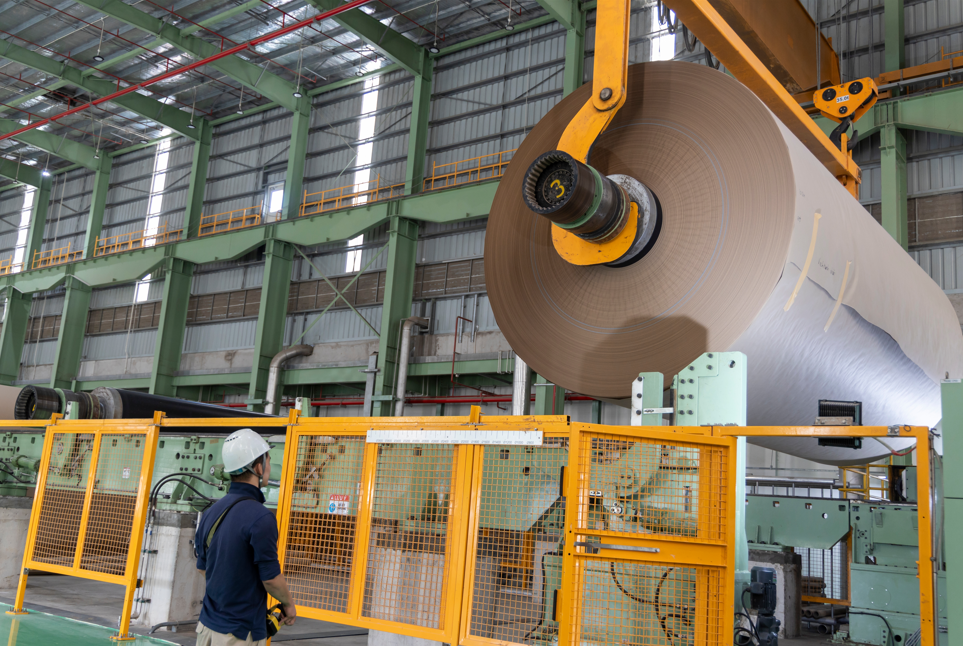
Converting — winders, coaters & laminators
Unwinders, rewinders, slitters, printing presses and laminators where consistent tension protects edge quality, registration and coat weight on every roll.
Example: a high-roller-weight, low-tension unwind where wide rangeability keeps readings precise at the low end of the scale.
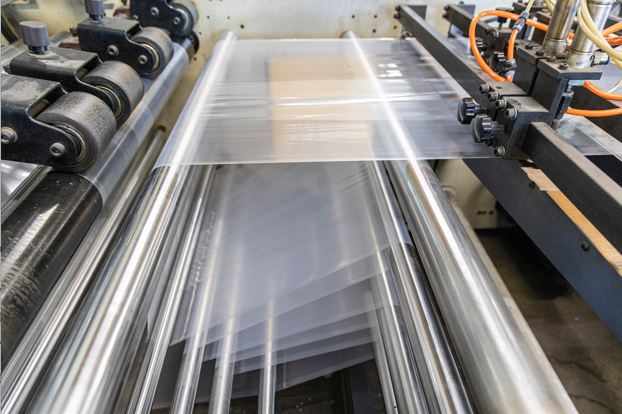
Process & textiles — films, foils, fabrics & nonwovens
Continuous-web lines in chemicals, plastics film, foil and textile processing — wherever a sealed, temperature-stable tension measuring roller assembly is needed.
Example: a humid, chemically aggressive line where a standard sensor would corrode — the FMU's sealed, compensated build keeps measuring.
How Web Tension Measurement Actually Works
How does a web tension load cell work?
A moving web wraps a roller, and its tension pulls that roller toward the web with a force whose direction is set by the entry and exit angles. A web tension load cell sits under the roller's bearing and turns that pull into a measurable signal: the force strains a precision element, a full Wheatstone strain-gauge bridge converts the strain into a tiny voltage proportional to load, and a transmitter amplifies and conditions it into a real-time tension value for your control system. In the FMU, two cylindrical cells carry the roller and can be rotated to align with the true direction of the pull — so they read the complete resultant force instead of just one component.
How do you measure web tension in a paper machine?
You measure it directly at a roll. Mount an FMU module under each end of a guide, lead or felt roll so the bearings transfer the web's pull into the load cells. The cells are rotated during start-up to align with the resultant force, then bolted in place; their combined signal feeds a BLH Nobel transmitter and the G4 instrument, which outputs total tension (and tension per unit width) to the PLC or DCS. Because the FMU is sealed and temperature-compensated, it works in wet, hot sections — press, coater, calender, winder — without drift, giving operators continuous, trustworthy tension for higher speed and fewer breaks. It functions as a precision load cell for paper machine service across every zone.
What is a force measurement unit (FMU) and how is it used?
An FMU — Force Measurement Unit — is a complete, ready-to-mount tension module rather than a bare sensor. Each FMU consists of two precision load cells, a load plate that carries the pillow block, and a base plate that fastens to the machine support. You install one FMU at each end of a roller; the web's tension is transmitted through the bearings into the cells. It's used wherever continuous web or strip tension must be controlled — paper machines, rolling mills, converting and textile lines — and because BLH Nobel engineers the unit to your bearing house and force range, it typically drops in with little or no machine modification.
How can you measure web tension without wrap angle restrictions?
By measuring the resultant force instead of a single component. Conventional sensors read only the vertical or horizontal part of the pull, so any asymmetry between entry and exit angles loses signal and accuracy. The FMU's load cells are cylindrical and rotatable: during commissioning you simply turn each cell while watching the readout, then lock it when the signal peaks — now it points straight along the true resultant force. That single design choice removes the need for sloped mounting plates and means symmetrical or asymmetrical wraps, small or large, all measure accurately.
Which load cell is best for measuring web tension in harsh environments?
For wet, hot, corrosive or wash-down sections, choose a sealed, temperature-compensated module that measures the resultant force and tolerates overload — which is exactly what the FMU is built for. It carries high ingress protection, handles temperatures seen in press and dryer sections, retrofits with a low profile, and accommodates thermal expansion of the mechanics. Backed by a 5-year warranty and 20-plus years in service, with standard KIS load cells as the sensing element for low-cost spares, the FMU is BLH Nobel's recommended web tension sensor for the harshest industrial environments.