



Load cell accessories: junction boxes,
power supplies and everything that
completes your weighing system
A load cell is only as reliable as the components around it. The right accessories turn individual sensors into a stable, accurate, serviceable system, and the wrong ones become the source of drift, noise and downtime you spend weeks chasing.
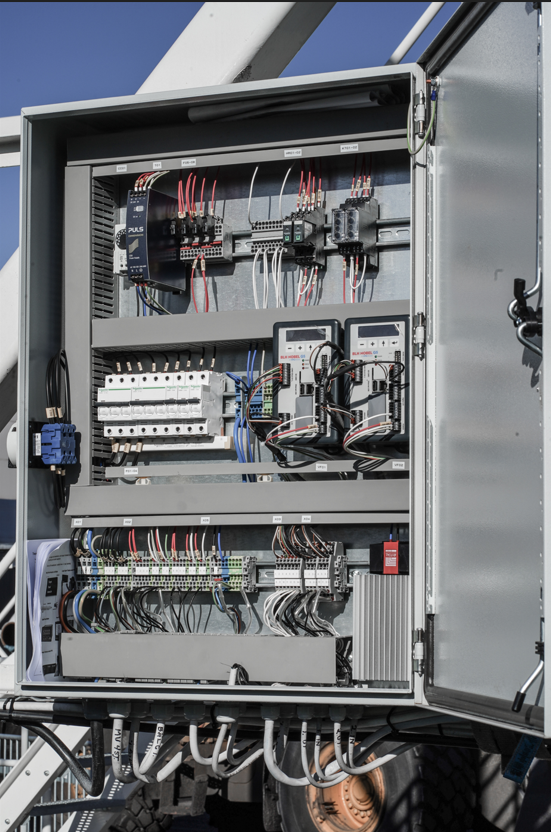
BLH Nobel supplies the full range needed to complete an installation: junction boxes and summing cards, power supplies, transmitters and amplifiers, cables and extension boxes, plus the calibrators and diagnostic tools that keep the system accurate over its life. Every accessory is built for rugged industrial duty, ships with full documentation and drawings, and is available in standard and ATEX/IECEx versions. We offer both BLH Nobel and selected third-party accessories, so you get the right match for your application, not just the parts that happen to share our label.
Why specify BLH Nobel accessories
A complete system, from one partner
Junction boxes, power supplies, summing units, cables, transmitters, communication devices and calibration tools: everything needed to turn load cells into a working weighing and force measurement system.
Built for industrial duty
Rugged construction and stainless steel options stand up to washdown, dust, vibration and corrosive process environments.
ATEX / IECEx versions available
Hazardous-area junction boxes and intrinsically safe components for use in classified zones, including offshore and process plant.
Full documentation and drawings
Every accessory ships with the documentation and dimensional drawings needed for fast, correct installation and easy ongoing maintenance.
Works with your existing load cells
Standard summing and junction products work with strain-gauge load cells regardless of brand, backed by both BLH Nobel and selected third-party accessories for the best application match.
Field-replaceable electronics
The LCAMP transmitter can be replaced in the field without recalibrating the transmitter or the load cell, keeping critical installations running.
The products behind every BLH Nobel weighing system
Standard building blocks, matched to your load cell count, environment and control system. Each links through to the accessories catalog.
What a junction box actually does
Combines the cells
An enclosure where the cables from several load cells come together. It connects the cells in parallel and sums their individual signals into one combined output, sent to the instrument or PLC over a single home-run cable.
Keeps the reading accurate
Most junction boxes include trimming potentiometers so each load cell's contribution can be balanced, keeping the reading accurate no matter where the load sits on the platform, tank or hopper. The SL-5 summing junction box covers standard multi-cell systems, with stainless steel and CGS4-C ATEX versions for demanding or hazardous areas.
Across the industries we serve
From process plants to offshore installations, the same core building blocks combine differently depending on the environment.

Process & tank/silo weighing
Multi-cell tank, silo and hopper systems rely on a summing box or summing card to combine three or four load cells into one accurate, load-position-independent signal. Stainless steel junction boxes and shielded cables keep readings stable in washdown and chemically aggressive environments.

Hazardous-area & offshore installations
In classified zones, offshore platforms, mooring systems, chemical and process plant, an ATEX/IECEx junction box such as the CGS4-C, paired with intrinsically safe transmitters like the LCAMP, lets you measure safely where standard hardware cannot be used.

Long-cable & distributed systems
Where load cells sit far from the control room, load cell extension boxes, quality cables and a transmitter that outputs a robust 4-20 mA (or fieldbus) signal preserve accuracy across long runs and electrically noisy plant.
Commissioning, calibration & service
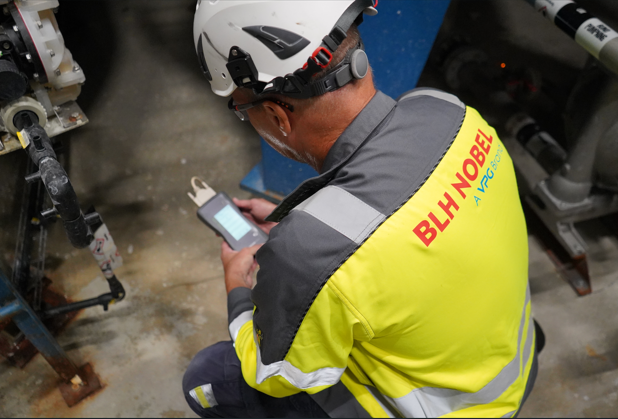
Pocket calibrators and diagnostic tools let technicians commission a new system, verify accuracy, and isolate a faulty cell from the front of the instrument, reducing the time a line stays down for troubleshooting.
Examples describe typical accessory use cases. For help specifying the exact accessories for your system, contact our application engineers.
Not sure which junction box, power supply or transmitter you need?
Tell us your load cell count, environment, hazardous-area classification and control system, and our engineers will specify the right accessories for a complete, reliable system.
Browse the catalog
See the full range of junction boxes, power supplies, summing units, cables, transmitters and diagnostic tools.
Request a quote
Get pricing and lead time for the accessories your system needs.
Talk to an engineer
Get help specifying and integrating accessories with new or existing load cells.
Load cell accessories FAQ
What accessories do I need to complete a load cell weighing system?
A typical multi-cell system needs a junction box or summing card to connect the load cells and combine their signals, quality shielded cables (and extension boxes for larger arrays), a regulated power supply, and a transmitter, amplifier or weighing instrument to convert and communicate the signal to your PLC. For commissioning and upkeep, add a calibrator and a diagnostic tool. BLH Nobel supplies all of these from a single partner.
What is a load cell junction box (summing box) and how does it work?
An enclosure where the cables from several load cells come together. It connects the cells in parallel and sums their individual signals into a single combined output, sent to the instrument or PLC over one home-run cable. Most include trimming potentiometers so each cell's contribution can be balanced, keeping the reading accurate regardless of where the load sits. BLH Nobel offers standard, stainless steel and ATEX versions, including the SL-5.
How many load cells can a summing box or junction box connect?
Most standard junction boxes connect up to four load cells, covering the majority of platform, tank, silo and hopper systems. For larger arrays, summing units and extension boxes such as the 308 / 306 / 304 series let you expand the cell count while keeping a single combined output.
Which junction box do I need for a hazardous (ATEX/IECEx) area?
An ATEX/IECEx-rated junction box such as the CGS4-C, used together with the appropriate intrinsically safe components and barriers. In washdown or corrosive zones, choose a stainless steel version. Because hazardous-area requirements depend on your zone, gas/dust group and overall system, it's best to confirm the configuration with our engineers before installation.
Do BLH Nobel accessories work with third-party load cells?
Yes. Standard junction boxes, summing cards, cables and power supplies work with strain-gauge load cells regardless of manufacturer, and BLH Nobel offers both its own and selected third-party accessories so you get the best match for your application.
Can the LCAMP transmitter be serviced without recalibrating the load cell?
Yes. The LCAMP is field-replaceable, so the electronics can be swapped without recalibrating the transmitter or the load cell itself, keeping critical installations running with minimal downtime.
Complete your weighing system with the right accessories
Tell us your load cell count, environment, hazardous-area classification and control system. Our engineers will specify the junction boxes, power supplies, cables and transmitters to match, backed by full documentation for straightforward installation.