


G5 Single-Channel Weighing Instrument
Every weighing application sits in a different place. Sometimes you need a clear operator display on the front of a panel; sometimes you just need a reliable signal feeding a PLC from inside a cabinet; and sometimes you need both — local readout and in-cabinet mounting. Forcing one fixed form factor onto all of them means compromise.
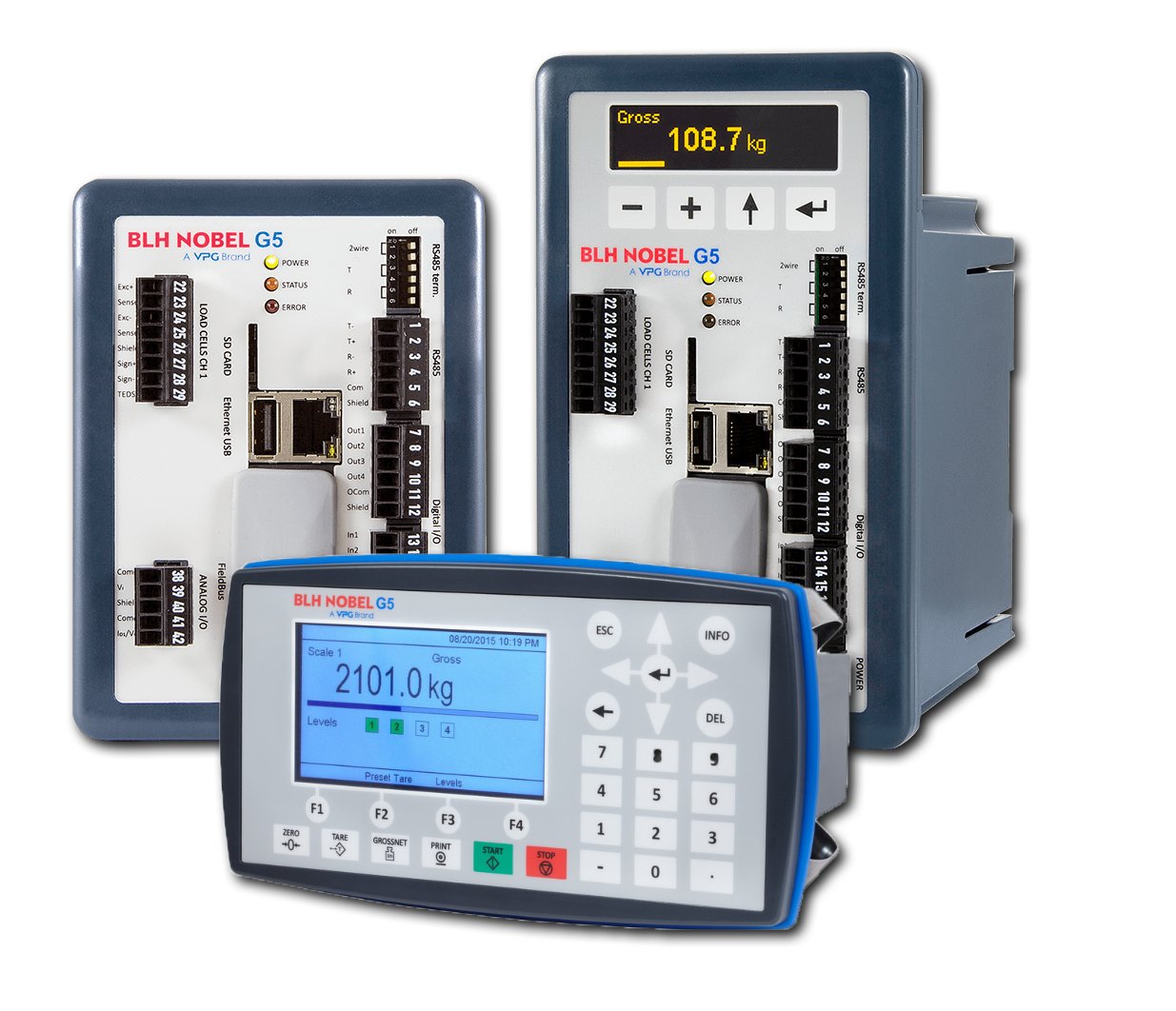
The BLH Nobel G5 is a high-performance single-channel weighing instrument that removes that compromise. As a true load cell indicator and strain gauge weighing instrument, it converts the signal from your transducers into accurate, useful weight information — and it comes in three variants so you can match the instrument to the installation rather than the other way around.
Across all three, you get 24-bit resolution, an embedded web server for browser-based set-up and diagnostics, and a wide range of communication options for clean load cell to PLC weighing instrument integration — from Modbus RTU and Modbus TCP to the full fieldbus range.
RESOLUTION
SAMPLE RATE
LOAD CELLS (350 Ω)
MOUNTING VARIANTS
Three Variants, One Platform
The same proven G5 measurement core, in the form factor your application needs.
- G5-PM — Panel Mount Weight Indicator The operator-facing choice: a panel mount weight indicator with a 4.3-inch high-resolution color display and functional keypad for clear readout and on-panel control, with full weighing and control functionality.
- G5-RM — DIN Rail Weight Transmitter The in-cabinet choice: a compact DIN rail weight transmitter with no local display, built to condition the load cell signal and feed it straight to your PLC or PC via analog and digital outputs, set up through the embedded web server.
- G5-RMD — DIN Rail Mount with Display The best of both: a DIN rail mount with display that adds a screen and keypad to the transmitter format — full weighing-indicator functionality and on-unit diagnostics, mounted in the cabinet, with connection to zener barriers.
Core Features Built for Demanding Industries
Shared across the G5 family — the capabilities process and automation engineers rely on to get accurate weight into the control system, reliably.
- 24-bit, 2400 samples/s 24-bit resolution with 2400 samples per second and 300 updates per second, driving up to 8 × 350 Ω load cells for accurate, responsive single-channel weighing and force measurement.
- Modbus TCP/RTU & full fieldbus Modbus RTU over RS485 and Modbus TCP over Ethernet as standard, plus optional Profibus, DeviceNet, ControlNet, EtherNet/IP and PROFINET — a PROFINET weighing indicator and Modbus weight transmitter in one platform.
- Embedded web server A weighing instrument with web interface: set up, calibrate, view live diagnostics, and back up or restore parameters from any browser, no special software needed.
- Setpoint & level supervision As a process weighing controller, the G5 provides setpoint and level supervision, flow-rate (weight-by-rate) calculation, and flexible digital I/O for fill, dose and cutoff control.
- Zener barrier connection Connection to zener barriers makes the G5 suitable as a hazardous area weighing instrument, passing the load cell signal safely between a classified zone and a safe area when installed accordingly.
- Built-in diagnostics Live scale info (input signal, gross weight, zero correction, excitation voltage and current) plus communication, fieldbus and I/O diagnostics, with excitation supervision to catch faults early.
- Backup & restore Store and reload full instrument configurations via USB, SD card or internal memory, so replacing or duplicating a unit is fast and your settings are never lost.
- Proven platform An industry best-selling series from a pioneer in process weighing, with high-accuracy systems installed in more than 100 countries and engineered for the toughest environments.
Technical Specifications
Key specifications shared across the G5 family.
|
|
|
|
|
|
|
|
|
|
|
|
|
|
|
|
|
|
|
|
|
|
|
|
|
|
|
|
|
|
|
|
|
|
|
|
|
|
|
|
|
|
Industry Applications
Wherever a single strain gauge weighing point has to be measured and controlled reliably, the G5 fits — across demanding industries.
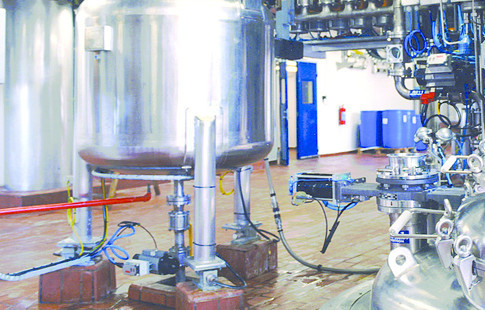
Tank, silo & hopper weighing
Summed signal from up to eight load cells for inventory, level and batch readings.

Process weighing & control
Accurate weight and force measurement for tanks, vessels and reactors feeding PC or PLC based control.

Factory automation
Reliable analog, Modbus and fieldbus signals for automated lines and material handling.

High-speed dynamic measurement
Fast sampling and update rates for force measurement and dynamic processes.

Filling, dosing & cutoff
Setpoint and level supervision with flexible digital I/O for accurate fill and dose control.

Hazardous-area weighing
Zener-barrier connection for weighing in classified zones across chemical and process plants.
Application in focus: one platform, two roles on the same plant
Picture a process line where a mixing vessel needs a clear operator readout at the panel, while a row of storage silos a few metres away simply needs reliable weight data fed into the PLC from the control cabinet. With the G5 family, both run on the same measurement platform: a G5-PM panel mount indicator gives the operator full readout and control at the vessel, while G5-RM DIN rail transmitters handle the silos in-cabinet — and where a silo also needs local readout, a G5-RMD adds a display without leaving the rail. Engineers learn and stock one instrument family, commission everything through the same embedded web interface, and integrate it all over Modbus TCP or PROFINET.
Questions, Answered
What is the difference between a weight indicator and a weight transmitter?
A weight indicator is an operator-facing device with a display and keypad that shows the weight and lets a user interact with the process at the panel — like the G5-PM panel mount. A weight transmitter conditions the load cell signal and sends it to a control system (analog or digital), typically with no local display — like the G5-RM DIN rail transmitter. The G5-RMD bridges both: it mounts on a DIN rail like a transmitter but adds a display and keypad for full weighing-indicator functionality. In short: an indicator presents and controls at the panel, while a transmitter feeds the PLC.
Which DIN rail weighing instrument has a built-in display?
The BLH Nobel G5-RMD (DIN Rail Mount with Display) is a DIN rail weighing instrument with a built-in display and functional keypad. It combines the in-cabinet DIN rail format of the G5-RM transmitter with full weighing-indicator functionality, so you can view weight and status and navigate parameters, menus and diagnostics directly on the unit — without a separate panel-mounted indicator.
How do you connect a single load cell weighing instrument to a PLC over Modbus TCP or PROFINET?
The G5 connects to a PLC using its standard interfaces and protocols. Modbus RTU runs over the RS485 serial interface and Modbus TCP runs over the Ethernet connection, both built in. For PROFINET, Profibus, DeviceNet, ControlNet or EtherNet/IP, an optional fieldbus module is installed in the instrument’s fieldbus slot and ordered with the unit. The G5 then exposes weight and status data to the PLC over the chosen network, with analog output also available.
Can a DIN rail weighing transmitter be used in a hazardous area with zener barriers?
The G5 supports connection to zener barriers, allowing the load cell signal to pass safely between a hazardous area and the instrument in a safe area. As always, the complete installation must be designed and certified for the specific zone and barrier combination, but the G5’s support for zener-barrier connection makes it suitable for hazardous-area weighing applications when installed accordingly.
How do you set up and calibrate a weighing instrument through a web interface?
The G5 has an embedded web server, so you connect it to your network and open its web pages from any web-supporting device — no special software required. From the browser you can view weight, status and live diagnostics (input signal, excitation voltage and current, I/O), change parameters, perform calibration, and back up or restore the configuration via USB, SD card or internal memory. This makes commissioning and servicing fast, even on DIN rail units without a local display.
Specify the Right G5 for Your Application
Panel mount indicator, DIN rail transmitter, or DIN rail with display — our application engineers will help you choose the variant, communication and configuration that fit your process, and support you through installation and calibration.
Contact BLH Nobel or download the G5 datasheet for full specifications.